Class Single<T>
- java.lang.Object
-
- rx
.Single<T>
- rx
-
- Type Parameters:
-
T- the type of the item emitted by the Single
@Experimental
public class Single<T>
extends Object
The Single class implements the Reactive Pattern for a single value response. SeeObservablefor the implementation of the Reactive Pattern for a stream or vector of values.Singlebehaves the same asObservableexcept that it can only emit either a single successful value, or an error (there is no "onComplete" notification as there is forObservable)Like an
Observable, aSingleis lazy, can be either "hot" or "cold", synchronous or asynchronous.The documentation for this class makes use of marble diagrams. The following legend explains these diagrams:

For more information see the ReactiveX documentation.
- Since:
- (If this class graduates from "Experimental" replace this parenthetical with the release number)
-
-
Nested Class Summary
Nested Classes
Modifier and Type Class and Description static interfaceSingle.OnSubscribe <T> Invoked when Single.execute is called.static interfaceSingle.Transformer <T ,R> Transformer function used bycompose(rx.Single.Transformer<? super T, ? extends R>).
-
Constructor Summary
Constructors
Modifier Constructor and Description protectedSingle(Single.OnSubscribe <T> f) Creates a Single with a Function to execute when it is subscribed to (executed).
-
Method Summary
Modifier and Type Method and Description <R> Single<R> compose(Single.Transformer <? super T ,? extends R> transformer) Transform a Single by applying a particular Transformer function to it.static <T> Observable<T> concat(Single<? extends T> t1, Single <? extends T> t2) Returns an Observable that emits the items emitted by two Singles, one after the other.static <T> Observable<T> concat(Single<? extends T> t1, Single <? extends T> t2, Single <? extends T> t3) Returns an Observable that emits the items emitted by three Singles, one after the other.static <T> Observable<T> concat(Single<? extends T> t1, Single <? extends T> t2, Single <? extends T> t3, Single <? extends T> t4) Returns an Observable that emits the items emitted by four Singles, one after the other.static <T> Observable<T> concat(Single<? extends T> t1, Single <? extends T> t2, Single <? extends T> t3, Single <? extends T> t4, Single <? extends T> t5) Returns an Observable that emits the items emitted by five Singles, one after the other.static <T> Observable<T> concat(Single<? extends T> t1, Single <? extends T> t2, Single <? extends T> t3, Single <? extends T> t4, Single <? extends T> t5, Single <? extends T> t6) Returns an Observable that emits the items emitted by six Singles, one after the other.static <T> Observable<T> concat(Single<? extends T> t1, Single <? extends T> t2, Single <? extends T> t3, Single <? extends T> t4, Single <? extends T> t5, Single <? extends T> t6, Single <? extends T> t7) Returns an Observable that emits the items emitted by seven Singles, one after the other.static <T> Observable<T> concat(Single<? extends T> t1, Single <? extends T> t2, Single <? extends T> t3, Single <? extends T> t4, Single <? extends T> t5, Single <? extends T> t6, Single <? extends T> t7, Single <? extends T> t8) Returns an Observable that emits the items emitted by eight Singles, one after the other.static <T> Observable<T> concat(Single<? extends T> t1, Single <? extends T> t2, Single <? extends T> t3, Single <? extends T> t4, Single <? extends T> t5, Single <? extends T> t6, Single <? extends T> t7, Single <? extends T> t8, Single <? extends T> t9) Returns an Observable that emits the items emitted by nine Singles, one after the other.Observable<T> concatWith(Single<? extends T> t1) Returns an Observable that emits the item emitted by the source Single, then the item emitted by the specified Single.static <T> Single<T> create(Single.OnSubscribe <T> f) Returns a Single that will execute the specified function when aSingleSubscriberexecutes it or aSubscribersubscribes to it.static <T> Single<T> defer(Callable<Single <T>> singleFactory) Single<T> delay(long delay, TimeUnitunit) Returns an Single that emits the items emitted by the source Single shifted forward in time by a specified delay.Single<T> delay(long delay, TimeUnitunit, Scheduler scheduler) Returns an Single that emits the items emitted by the source Single shifted forward in time by a specified delay.Single<T> doOnError(Action1<Throwable > onError) Modifies the sourceSingleso that it invokes an action if it callsonError.Single<T> doOnSuccess(Action1<? super T> onSuccess) Modifies the sourceSingleso that it invokes an action when it callsonSuccess.static <T> Single<T> error(Throwableexception) Returns a Single that invokes a subscriber'sonErrormethod when the subscriber subscribes to it.<R> Single<R> flatMap(Func1<? super T ,? extends Single <? extends R>> func) Returns a Single that is based on applying a specified function to the item emitted by the source Single, where that function returns a Single.<R> Observable<R> flatMapObservable(Func1<? super T ,? extends Observable <? extends R>> func) Returns an Observable that emits items based on applying a specified function to the item emitted by the source Observable, where that function returns an Observable.static <T> Single<T> from(Future<? extends T> future) Converts aFutureinto aSingle.static <T> Single<T> from(Future<? extends T> future, long timeout, TimeUnit unit) Converts aFutureinto aSingle, with a timeout on the Future.static <T> Single<T> from(Future<? extends T> future, Scheduler scheduler) static <T> Single<T> fromCallable(Callable<? extends T> func) Returns aSinglethat invokes passed function and emits its result for each new Observer that subscribes.static <T> Single<T> just(T value)Returns aSinglethat emits a specified item.<R> Single<R> map(Func1<? super T ,? extends R> func) Returns a Single that applies a specified function to the item emitted by the source Single and emits the result of this function application.static <T> Single<T> merge(Single<? extends Single <? extends T>> source) Flattens aSinglethat emits aSingleinto a singleSinglethat emits the item emitted by the nestedSingle, without any transformation.static <T> Observable<T> merge(Single<? extends T> t1, Single <? extends T> t2) Flattens two Singles into a single Observable, without any transformation.static <T> Observable<T> merge(Single<? extends T> t1, Single <? extends T> t2, Single <? extends T> t3) Flattens three Singles into a single Observable, without any transformation.static <T> Observable<T> merge(Single<? extends T> t1, Single <? extends T> t2, Single <? extends T> t3, Single <? extends T> t4) Flattens four Singles into a single Observable, without any transformation.static <T> Observable<T> merge(Single<? extends T> t1, Single <? extends T> t2, Single <? extends T> t3, Single <? extends T> t4, Single <? extends T> t5) Flattens five Singles into a single Observable, without any transformation.static <T> Observable<T> merge(Single<? extends T> t1, Single <? extends T> t2, Single <? extends T> t3, Single <? extends T> t4, Single <? extends T> t5, Single <? extends T> t6) Flattens six Singles into a single Observable, without any transformation.static <T> Observable<T> merge(Single<? extends T> t1, Single <? extends T> t2, Single <? extends T> t3, Single <? extends T> t4, Single <? extends T> t5, Single <? extends T> t6, Single <? extends T> t7) Flattens seven Singles into a single Observable, without any transformation.static <T> Observable<T> merge(Single<? extends T> t1, Single <? extends T> t2, Single <? extends T> t3, Single <? extends T> t4, Single <? extends T> t5, Single <? extends T> t6, Single <? extends T> t7, Single <? extends T> t8) Flattens eight Singles into a single Observable, without any transformation.static <T> Observable<T> merge(Single<? extends T> t1, Single <? extends T> t2, Single <? extends T> t3, Single <? extends T> t4, Single <? extends T> t5, Single <? extends T> t6, Single <? extends T> t7, Single <? extends T> t8, Single <? extends T> t9) Flattens nine Singles into a single Observable, without any transformation.Observable<T> mergeWith(Single<? extends T> t1) Flattens this and another Single into a single Observable, without any transformation.Single<T> observeOn(Schedulerscheduler) Modifies a Single to emit its item (or notify of its error) on a specifiedScheduler, asynchronously.Single<T> onErrorReturn(Func1<Throwable ,? extends T> resumeFunction) Instructs a Single to emit an item (returned by a specified function) rather than invokingonErrorif it encounters an error.Subscriptionsubscribe()Subscribes to a Single but ignore its emission or notification.Subscriptionsubscribe(Action1<? super T> onSuccess) Subscribes to a Single and provides a callback to handle the item it emits.Subscriptionsubscribe(Action1<? super T> onSuccess, Action1 <Throwable > onError) Subscribes to a Single and provides callbacks to handle the item it emits or any error notification it issues.Subscriptionsubscribe(SingleSubscriber<? super T> te) Subscribes to a Single and provides aSingleSubscriberthat implements functions to handle the item the Single emits or any error notification it issues.Subscriptionsubscribe(Subscriber<? super T> subscriber) Subscribes to a Single and provides a Subscriber that implements functions to handle the item the Single emits or any error notification it issues.Single<T> subscribeOn(Schedulerscheduler) Asynchronously subscribes subscribers to this Single on the specifiedScheduler.Single<T> timeout(long timeout, TimeUnittimeUnit) Returns a Single that mirrors the source Single but applies a timeout policy for its emitted item.Single<T> timeout(long timeout, TimeUnittimeUnit, Scheduler scheduler) Returns a Single that mirrors the source Single but applies a timeout policy for its emitted item, where this policy is governed on a specified Scheduler.Single<T> timeout(long timeout, TimeUnittimeUnit, Single <? extends T> other) Returns a Single that mirrors the source Single but applies a timeout policy for its emitted item.Single<T> timeout(long timeout, TimeUnittimeUnit, Single <? extends T> other, Scheduler scheduler) Returns a Single that mirrors the source Single but applies a timeout policy for its emitted item, using a specified Scheduler.BlockingSingle<T> toBlocking()Converts a Single into aBlockingSingle(a Single with blocking operators).Observable<T> toObservable()Converts this Single into anObservable.voidunsafeSubscribe(Subscriber<? super T> subscriber) Subscribes to a Single and invokes theSingle.OnSubscribefunction without any contract protection, error handling, unsubscribe, or execution hooks.static <T1,T2 ,R> Single <R> zip(Single<? extends T1> o1, Single <? extends T2> o2, Func2 <? super T1 ,? super T2 ,? extends R> zipFunction) Returns a Single that emits the results of a specified combiner function applied to two items emitted by two other Singles.static <T1,T2 ,T3 ,R> Single <R> zip(Single<? extends T1> o1, Single <? extends T2> o2, Single <? extends T3> o3, Func3 <? super T1 ,? super T2 ,? super T3 ,? extends R> zipFunction) Returns a Single that emits the results of a specified combiner function applied to three items emitted by three other Singles.static <T1,T2 ,T3 ,T4 ,R> Single <R> zip(Single<? extends T1> o1, Single <? extends T2> o2, Single <? extends T3> o3, Single <? extends T4> o4, Func4 <? super T1 ,? super T2 ,? super T3 ,? super T4 ,? extends R> zipFunction) Returns an Observable that emits the results of a specified combiner function applied to four items emitted by four other Singles.static <T1,T2 ,T3 ,T4 ,T5 ,R> Single <R> zip(Single<? extends T1> o1, Single <? extends T2> o2, Single <? extends T3> o3, Single <? extends T4> o4, Single <? extends T5> o5, Func5 <? super T1 ,? super T2 ,? super T3 ,? super T4 ,? super T5 ,? extends R> zipFunction) Returns an Observable that emits the results of a specified combiner function applied to five items emitted by five other Singles.static <T1,T2 ,T3 ,T4 ,T5 ,T6 ,R> Single <R> zip(Single<? extends T1> o1, Single <? extends T2> o2, Single <? extends T3> o3, Single <? extends T4> o4, Single <? extends T5> o5, Single <? extends T6> o6, Func6 <? super T1 ,? super T2 ,? super T3 ,? super T4 ,? super T5 ,? super T6 ,? extends R> zipFunction) Returns an Observable that emits the results of a specified combiner function applied to six items emitted by six other Singles.static <T1,T2 ,T3 ,T4 ,T5 ,T6 ,T7 ,R> Single <R> zip(Single<? extends T1> o1, Single <? extends T2> o2, Single <? extends T3> o3, Single <? extends T4> o4, Single <? extends T5> o5, Single <? extends T6> o6, Single <? extends T7> o7, Func7 <? super T1 ,? super T2 ,? super T3 ,? super T4 ,? super T5 ,? super T6 ,? super T7 ,? extends R> zipFunction) Returns an Observable that emits the results of a specified combiner function applied to seven items emitted by seven other Singles.static <T1,T2 ,T3 ,T4 ,T5 ,T6 ,T7 ,T8 ,R> Single <R> zip(Single<? extends T1> o1, Single <? extends T2> o2, Single <? extends T3> o3, Single <? extends T4> o4, Single <? extends T5> o5, Single <? extends T6> o6, Single <? extends T7> o7, Single <? extends T8> o8, Func8 <? super T1 ,? super T2 ,? super T3 ,? super T4 ,? super T5 ,? super T6 ,? super T7 ,? super T8 ,? extends R> zipFunction) Returns an Observable that emits the results of a specified combiner function applied to eight items emitted by eight other Singles.static <T1,T2 ,T3 ,T4 ,T5 ,T6 ,T7 ,T8 ,T9 ,R> Single <R> zip(Single<? extends T1> o1, Single <? extends T2> o2, Single <? extends T3> o3, Single <? extends T4> o4, Single <? extends T5> o5, Single <? extends T6> o6, Single <? extends T7> o7, Single <? extends T8> o8, Single <? extends T9> o9, Func9 <? super T1 ,? super T2 ,? super T3 ,? super T4 ,? super T5 ,? super T6 ,? super T7 ,? super T8 ,? super T9 ,? extends R> zipFunction) Returns an Observable that emits the results of a specified combiner function applied to nine items emitted by nine other Singles.<T2,R> Single <R> zipWith(Single<? extends T2> other, Func2 <? super T ,? super T2 ,? extends R> zipFunction) Returns a Single that emits the result of applying a specified function to the pair of items emitted by the source Single and another specified Single.
-
-
-
Constructor Detail
Single
protected Single(Single
.OnSubscribe <T> f) Creates a Single with a Function to execute when it is subscribed to (executed).Note: Use
create(OnSubscribe)to create a Single, instead of this constructor, unless you specifically have a need for inheritance.- Parameters:
-
f-OnExecuteto be executed whenexecute(SingleSubscriber)orsubscribe(Subscriber)is called
-
Method Detail
create
public static final <T> Single
<T> create(Single .OnSubscribe <T> f) Returns a Single that will execute the specified function when aSingleSubscriberexecutes it or aSubscribersubscribes to it.
Write the function you pass to
createso that it behaves as a Single: It should invoke the SingleSubscriberonSuccessand/oronErrormethods appropriately.A well-formed Single must invoke either the SingleSubscriber's
onSuccessmethod exactly once or itsonErrormethod exactly once.- Scheduler:
-
createdoes not operate by default on a particularScheduler.
- Type Parameters:
-
T- the type of the item that this Single emits - Parameters:
-
f- a function that accepts anSingleSubscriber<T>, and invokes itsonSuccessoronErrormethods as appropriate - Returns:
-
a Single that, when a
Subscribersubscribes to it, will execute the specified function - See Also:
- ReactiveX operators documentation: Create
compose
public <R> Single
<R> compose(Single .Transformer <? super T ,? extends R> transformer) Transform a Single by applying a particular Transformer function to it.This method operates on the Single itself whereas
lift(rx.Observable.Operator<? extends R, ? super T>)operates on the Single's Subscribers or Observers.If the operator you are creating is designed to act on the individual item emitted by a Single, use
lift(rx.Observable.Operator<? extends R, ? super T>). If your operator is designed to transform the source Single as a whole (for instance, by applying a particular set of existing RxJava operators to it) usecompose.- Scheduler:
-
composedoes not operate by default on a particularScheduler.
- Parameters:
-
transformer- implements the function that transforms the source Single - Returns:
- the source Single, transformed by the transformer function
- See Also:
- RxJava wiki: Implementing Your Own Operators
concat
public static final <T> Observable
<T> concat(Single <? extends T> t1, Single <? extends T> t2) Returns an Observable that emits the items emitted by two Singles, one after the other.
- Scheduler:
-
concatdoes not operate by default on a particularScheduler.
- Parameters:
-
t1- an Single to be concatenated -
t2- an Single to be concatenated - Returns:
- an Observable that emits items emitted by the two source Singles, one after the other.
- See Also:
- ReactiveX operators documentation: Concat
concat
public static final <T> Observable
<T> concat(Single <? extends T> t1, Single <? extends T> t2, Single <? extends T> t3) Returns an Observable that emits the items emitted by three Singles, one after the other. - Scheduler:
-
concatdoes not operate by default on a particularScheduler.
- Parameters:
-
t1- a Single to be concatenated -
t2- a Single to be concatenated -
t3- a Single to be concatenated - Returns:
- an Observable that emits items emitted by the three source Singles, one after the other.
- See Also:
- ReactiveX operators documentation: Concat
concat
public static final <T> Observable
<T> concat(Single <? extends T> t1, Single <? extends T> t2, Single <? extends T> t3, Single <? extends T> t4) Returns an Observable that emits the items emitted by four Singles, one after the other. - Scheduler:
-
concatdoes not operate by default on a particularScheduler.
- Parameters:
-
t1- a Single to be concatenated -
t2- a Single to be concatenated -
t3- a Single to be concatenated -
t4- a Single to be concatenated - Returns:
- an Observable that emits items emitted by the four source Singles, one after the other.
- See Also:
- ReactiveX operators documentation: Concat
concat
public static final <T> Observable
<T> concat(Single <? extends T> t1, Single <? extends T> t2, Single <? extends T> t3, Single <? extends T> t4, Single <? extends T> t5) Returns an Observable that emits the items emitted by five Singles, one after the other. - Scheduler:
-
concatdoes not operate by default on a particularScheduler.
- Parameters:
-
t1- a Single to be concatenated -
t2- a Single to be concatenated -
t3- a Single to be concatenated -
t4- a Single to be concatenated -
t5- a Single to be concatenated - Returns:
- an Observable that emits items emitted by the five source Singles, one after the other.
- See Also:
- ReactiveX operators documentation: Concat
concat
public static final <T> Observable
<T> concat(Single <? extends T> t1, Single <? extends T> t2, Single <? extends T> t3, Single <? extends T> t4, Single <? extends T> t5, Single <? extends T> t6) Returns an Observable that emits the items emitted by six Singles, one after the other. - Scheduler:
-
concatdoes not operate by default on a particularScheduler.
- Parameters:
-
t1- a Single to be concatenated -
t2- a Single to be concatenated -
t3- a Single to be concatenated -
t4- a Single to be concatenated -
t5- a Single to be concatenated -
t6- a Single to be concatenated - Returns:
- an Observable that emits items emitted by the six source Singles, one after the other.
- See Also:
- ReactiveX operators documentation: Concat
concat
public static final <T> Observable
<T> concat(Single <? extends T> t1, Single <? extends T> t2, Single <? extends T> t3, Single <? extends T> t4, Single <? extends T> t5, Single <? extends T> t6, Single <? extends T> t7) Returns an Observable that emits the items emitted by seven Singles, one after the other. - Scheduler:
-
concatdoes not operate by default on a particularScheduler.
- Parameters:
-
t1- a Single to be concatenated -
t2- a Single to be concatenated -
t3- a Single to be concatenated -
t4- a Single to be concatenated -
t5- a Single to be concatenated -
t6- a Single to be concatenated -
t7- a Single to be concatenated - Returns:
- an Observable that emits items emitted by the seven source Singles, one after the other.
- See Also:
- ReactiveX operators documentation: Concat
concat
public static final <T> Observable
<T> concat(Single <? extends T> t1, Single <? extends T> t2, Single <? extends T> t3, Single <? extends T> t4, Single <? extends T> t5, Single <? extends T> t6, Single <? extends T> t7, Single <? extends T> t8) Returns an Observable that emits the items emitted by eight Singles, one after the other. - Scheduler:
-
concatdoes not operate by default on a particularScheduler.
- Parameters:
-
t1- a Single to be concatenated -
t2- a Single to be concatenated -
t3- a Single to be concatenated -
t4- a Single to be concatenated -
t5- a Single to be concatenated -
t6- a Single to be concatenated -
t7- a Single to be concatenated -
t8- a Single to be concatenated - Returns:
- an Observable that emits items emitted by the eight source Singles, one after the other.
- See Also:
- ReactiveX operators documentation: Concat
concat
public static final <T> Observable
<T> concat(Single <? extends T> t1, Single <? extends T> t2, Single <? extends T> t3, Single <? extends T> t4, Single <? extends T> t5, Single <? extends T> t6, Single <? extends T> t7, Single <? extends T> t8, Single <? extends T> t9) Returns an Observable that emits the items emitted by nine Singles, one after the other. - Scheduler:
-
concatdoes not operate by default on a particularScheduler.
- Parameters:
-
t1- a Single to be concatenated -
t2- a Single to be concatenated -
t3- a Single to be concatenated -
t4- a Single to be concatenated -
t5- a Single to be concatenated -
t6- a Single to be concatenated -
t7- a Single to be concatenated -
t8- a Single to be concatenated -
t9- a Single to be concatenated - Returns:
- an Observable that emits items emitted by the nine source Singles, one after the other.
- See Also:
- ReactiveX operators documentation: Concat
error
public static final <T> Single
<T> error(Throwable exception) Returns a Single that invokes a subscriber'sonErrormethod when the subscriber subscribes to it.
- Scheduler:
-
errordoes not operate by default on a particularScheduler.
- Type Parameters:
-
T- the type of the item (ostensibly) emitted by the Single - Parameters:
-
exception- the particular Throwable to pass toonError - Returns:
-
a Single that invokes the subscriber's
onErrormethod when the subscriber subscribes to it - See Also:
- ReactiveX operators documentation: Throw
from
public static final <T> Single
<T> from(Future <? extends T> future) Converts aFutureinto aSingle.
You can convert any object that supports the
Futureinterface into a Single that emits the return value of theFuturemethod of that object, by passing the object into the.get() frommethod.Important note: This Single is blocking; you cannot unsubscribe from it.
- Scheduler:
-
fromdoes not operate by default on a particularScheduler.
- Type Parameters:
-
T- the type of object that theFuturereturns, and also the type of item to be emitted by the resultingSingle - Parameters:
-
future- the sourceFuture - Returns:
-
a
Singlethat emits the item from the sourceFuture - See Also:
- ReactiveX operators documentation: From
from
public static final <T> Single
<T> from(Future <? extends T> future, long timeout, TimeUnit unit) Converts aFutureinto aSingle, with a timeout on the Future. You can convert any object that supports the
Futureinterface into aSinglethat emits the return value of theFuturemethod of that object, by passing the object into the.get() frommethod.Important note: This
Singleis blocking; you cannot unsubscribe from it.- Scheduler:
-
fromdoes not operate by default on a particularScheduler.
- Type Parameters:
-
T- the type of object that theFuturereturns, and also the type of item to be emitted by the resultingSingle - Parameters:
-
future- the sourceFuture -
timeout- the maximum time to wait before callingget -
unit- theTimeUnitof thetimeoutargument - Returns:
-
a
Singlethat emits the item from the sourceFuture - See Also:
- ReactiveX operators documentation: From
from
public static final <T> Single
<T> from(Future <? extends T> future, Scheduler scheduler) Converts aFuture, operating on a specifiedScheduler, into aSingle.
You can convert any object that supports the
Futureinterface into aSinglethat emits the return value of theFuturemethod of that object, by passing the object into the.get() frommethod.- Scheduler:
-
you specify which
Schedulerthis operator will use
- Type Parameters:
-
T- the type of object that theFuturereturns, and also the type of item to be emitted by the resultingSingle - Parameters:
-
future- the sourceFuture -
scheduler- theSchedulerto wait for the Future on. Use a Scheduler such asSchedulersthat can block and wait on the Future.io() - Returns:
-
a
Singlethat emits the item from the sourceFuture - See Also:
- ReactiveX operators documentation: From
fromCallable
@Experimental public static <T> Single
<T> fromCallable(Callable <? extends T> func) Returns aSinglethat invokes passed function and emits its result for each new Observer that subscribes.Allows you to defer execution of passed function until Observer subscribes to the
Single. It makes passed function "lazy". Result of the function invocation will be emitted by theSingle.- Scheduler:
-
fromCallabledoes not operate by default on a particularScheduler.
just
public static final <T> Single
<T> just(T value) Returns aSinglethat emits a specified item.
To convert any object into a
Singlethat emits that object, pass that object into thejustmethod.- Scheduler:
-
justdoes not operate by default on a particularScheduler.
- Type Parameters:
-
T- the type of that item - Parameters:
-
value- the item to emit - Returns:
-
a
Singlethat emitsvalue - See Also:
- ReactiveX operators documentation: Just
merge
public static final <T> Single
<T> merge(Single <? extends Single <? extends T>> source) Flattens aSinglethat emits aSingleinto a singleSinglethat emits the item emitted by the nestedSingle, without any transformation.
- Scheduler:
-
mergedoes not operate by default on a particularScheduler.
- Parameters:
-
source- aSinglethat emits aSingle - Returns:
-
a
Singlethat emits the item that is the result of flattening theSingleemitted bysource - See Also:
- ReactiveX operators documentation: Merge
merge
public static final <T> Observable
<T> merge(Single <? extends T> t1, Single <? extends T> t2) Flattens two Singles into a single Observable, without any transformation.
You can combine items emitted by multiple Singles so that they appear as a single Observable, by using the
mergemethod.- Scheduler:
-
mergedoes not operate by default on a particularScheduler.
- Parameters:
-
t1- a Single to be merged -
t2- a Single to be merged - Returns:
- an Observable that emits all of the items emitted by the source Singles
- See Also:
- ReactiveX operators documentation: Merge
merge
public static final <T> Observable
<T> merge(Single <? extends T> t1, Single <? extends T> t2, Single <? extends T> t3) Flattens three Singles into a single Observable, without any transformation. You can combine items emitted by multiple Singles so that they appear as a single Observable, by using the
mergemethod.- Scheduler:
-
mergedoes not operate by default on a particularScheduler.
- Parameters:
-
t1- a Single to be merged -
t2- a Single to be merged -
t3- a Single to be merged - Returns:
- an Observable that emits all of the items emitted by the source Singles
- See Also:
- ReactiveX operators documentation: Merge
merge
public static final <T> Observable
<T> merge(Single <? extends T> t1, Single <? extends T> t2, Single <? extends T> t3, Single <? extends T> t4) Flattens four Singles into a single Observable, without any transformation. You can combine items emitted by multiple Singles so that they appear as a single Observable, by using the
mergemethod.- Scheduler:
-
mergedoes not operate by default on a particularScheduler.
- Parameters:
-
t1- a Single to be merged -
t2- a Single to be merged -
t3- a Single to be merged -
t4- a Single to be merged - Returns:
- an Observable that emits all of the items emitted by the source Singles
- See Also:
- ReactiveX operators documentation: Merge
merge
public static final <T> Observable
<T> merge(Single <? extends T> t1, Single <? extends T> t2, Single <? extends T> t3, Single <? extends T> t4, Single <? extends T> t5) Flattens five Singles into a single Observable, without any transformation. You can combine items emitted by multiple Singles so that they appear as a single Observable, by using the
mergemethod.- Scheduler:
-
mergedoes not operate by default on a particularScheduler.
- Parameters:
-
t1- a Single to be merged -
t2- a Single to be merged -
t3- a Single to be merged -
t4- a Single to be merged -
t5- a Single to be merged - Returns:
- an Observable that emits all of the items emitted by the source Singles
- See Also:
- ReactiveX operators documentation: Merge
merge
public static final <T> Observable
<T> merge(Single <? extends T> t1, Single <? extends T> t2, Single <? extends T> t3, Single <? extends T> t4, Single <? extends T> t5, Single <? extends T> t6) Flattens six Singles into a single Observable, without any transformation. You can combine items emitted by multiple Singles so that they appear as a single Observable, by using the
mergemethod.- Scheduler:
-
mergedoes not operate by default on a particularScheduler.
- Parameters:
-
t1- a Single to be merged -
t2- a Single to be merged -
t3- a Single to be merged -
t4- a Single to be merged -
t5- a Single to be merged -
t6- a Single to be merged - Returns:
- an Observable that emits all of the items emitted by the source Singles
- See Also:
- ReactiveX operators documentation: Merge
merge
public static final <T> Observable
<T> merge(Single <? extends T> t1, Single <? extends T> t2, Single <? extends T> t3, Single <? extends T> t4, Single <? extends T> t5, Single <? extends T> t6, Single <? extends T> t7) Flattens seven Singles into a single Observable, without any transformation. You can combine items emitted by multiple Singles so that they appear as a single Observable, by using the
mergemethod.- Scheduler:
-
mergedoes not operate by default on a particularScheduler.
- Parameters:
-
t1- a Single to be merged -
t2- a Single to be merged -
t3- a Single to be merged -
t4- a Single to be merged -
t5- a Single to be merged -
t6- a Single to be merged -
t7- a Single to be merged - Returns:
- an Observable that emits all of the items emitted by the source Singles
- See Also:
- ReactiveX operators documentation: Merge
merge
public static final <T> Observable
<T> merge(Single <? extends T> t1, Single <? extends T> t2, Single <? extends T> t3, Single <? extends T> t4, Single <? extends T> t5, Single <? extends T> t6, Single <? extends T> t7, Single <? extends T> t8) Flattens eight Singles into a single Observable, without any transformation. You can combine items emitted by multiple Singles so that they appear as a single Observable, by using the
mergemethod.- Scheduler:
-
mergedoes not operate by default on a particularScheduler.
- Parameters:
-
t1- a Single to be merged -
t2- a Single to be merged -
t3- a Single to be merged -
t4- a Single to be merged -
t5- a Single to be merged -
t6- a Single to be merged -
t7- a Single to be merged -
t8- a Single to be merged - Returns:
- an Observable that emits all of the items emitted by the source Singles
- See Also:
- ReactiveX operators documentation: Merge
merge
public static final <T> Observable
<T> merge(Single <? extends T> t1, Single <? extends T> t2, Single <? extends T> t3, Single <? extends T> t4, Single <? extends T> t5, Single <? extends T> t6, Single <? extends T> t7, Single <? extends T> t8, Single <? extends T> t9) Flattens nine Singles into a single Observable, without any transformation. You can combine items emitted by multiple Singles so that they appear as a single Observable, by using the
mergemethod.- Scheduler:
-
mergedoes not operate by default on a particularScheduler.
- Parameters:
-
t1- a Single to be merged -
t2- a Single to be merged -
t3- a Single to be merged -
t4- a Single to be merged -
t5- a Single to be merged -
t6- a Single to be merged -
t7- a Single to be merged -
t8- a Single to be merged -
t9- a Single to be merged - Returns:
- an Observable that emits all of the items emitted by the source Singles
- See Also:
- ReactiveX operators documentation: Merge
zip
public static final <T1
,T2 ,R> Single <R> zip(Single <? extends T1> o1, Single <? extends T2> o2, Func2 <? super T1 ,? super T2 ,? extends R> zipFunction) Returns a Single that emits the results of a specified combiner function applied to two items emitted by two other Singles.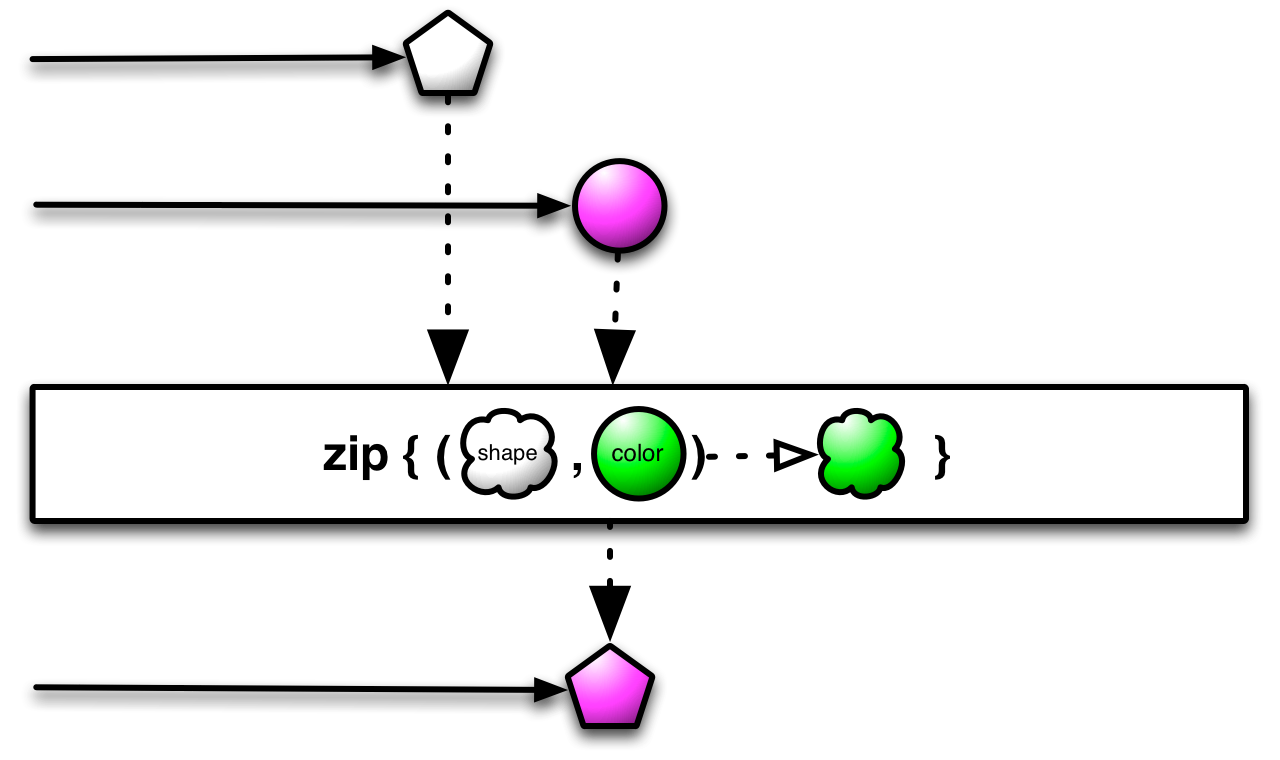
- Scheduler:
-
zipdoes not operate by default on a particularScheduler.
- Parameters:
-
o1- the first source Single -
o2- a second source Single -
zipFunction- a function that, when applied to the item emitted by each of the source Singles, results in an item that will be emitted by the resulting Single - Returns:
- a Single that emits the zipped results
- See Also:
- ReactiveX operators documentation: Zip
zip
public static final <T1
,T2 ,T3 ,R> Single <R> zip(Single <? extends T1> o1, Single <? extends T2> o2, Single <? extends T3> o3, Func3 <? super T1 ,? super T2 ,? super T3 ,? extends R> zipFunction) Returns a Single that emits the results of a specified combiner function applied to three items emitted by three other Singles. - Scheduler:
-
zipdoes not operate by default on a particularScheduler.
- Parameters:
-
o1- the first source Single -
o2- a second source Single -
o3- a third source Single -
zipFunction- a function that, when applied to the item emitted by each of the source Singles, results in an item that will be emitted by the resulting Single - Returns:
- a Single that emits the zipped results
- See Also:
- ReactiveX operators documentation: Zip
zip
public static final <T1
,T2 ,T3 ,T4 ,R> Single <R> zip(Single <? extends T1> o1, Single <? extends T2> o2, Single <? extends T3> o3, Single <? extends T4> o4, Func4 <? super T1 ,? super T2 ,? super T3 ,? super T4 ,? extends R> zipFunction) Returns an Observable that emits the results of a specified combiner function applied to four items emitted by four other Singles. - Scheduler:
-
zipdoes not operate by default on a particularScheduler.
- Parameters:
-
o1- the first source Single -
o2- a second source Single -
o3- a third source Single -
o4- a fourth source Single -
zipFunction- a function that, when applied to the item emitted by each of the source Singles, results in an item that will be emitted by the resulting Single - Returns:
- a Single that emits the zipped results
- See Also:
- ReactiveX operators documentation: Zip
zip
public static final <T1
,T2 ,T3 ,T4 ,T5 ,R> Single <R> zip(Single <? extends T1> o1, Single <? extends T2> o2, Single <? extends T3> o3, Single <? extends T4> o4, Single <? extends T5> o5, Func5 <? super T1 ,? super T2 ,? super T3 ,? super T4 ,? super T5 ,? extends R> zipFunction) Returns an Observable that emits the results of a specified combiner function applied to five items emitted by five other Singles. - Scheduler:
-
zipdoes not operate by default on a particularScheduler.
- Parameters:
-
o1- the first source Single -
o2- a second source Single -
o3- a third source Single -
o4- a fourth source Single -
o5- a fifth source Single -
zipFunction- a function that, when applied to the item emitted by each of the source Singles, results in an item that will be emitted by the resulting Single - Returns:
- a Single that emits the zipped results
- See Also:
- ReactiveX operators documentation: Zip
zip
public static final <T1
,T2 ,T3 ,T4 ,T5 ,T6 ,R> Single <R> zip(Single <? extends T1> o1, Single <? extends T2> o2, Single <? extends T3> o3, Single <? extends T4> o4, Single <? extends T5> o5, Single <? extends T6> o6, Func6 <? super T1 ,? super T2 ,? super T3 ,? super T4 ,? super T5 ,? super T6 ,? extends R> zipFunction) Returns an Observable that emits the results of a specified combiner function applied to six items emitted by six other Singles. - Scheduler:
-
zipdoes not operate by default on a particularScheduler.
- Parameters:
-
o1- the first source Single -
o2- a second source Single -
o3- a third source Single -
o4- a fourth source Single -
o5- a fifth source Single -
o6- a sixth source Single -
zipFunction- a function that, when applied to the item emitted by each of the source Singles, results in an item that will be emitted by the resulting Single - Returns:
- a Single that emits the zipped results
- See Also:
- ReactiveX operators documentation: Zip
zip
public static final <T1
,T2 ,T3 ,T4 ,T5 ,T6 ,T7 ,R> Single <R> zip(Single <? extends T1> o1, Single <? extends T2> o2, Single <? extends T3> o3, Single <? extends T4> o4, Single <? extends T5> o5, Single <? extends T6> o6, Single <? extends T7> o7, Func7 <? super T1 ,? super T2 ,? super T3 ,? super T4 ,? super T5 ,? super T6 ,? super T7 ,? extends R> zipFunction) Returns an Observable that emits the results of a specified combiner function applied to seven items emitted by seven other Singles. - Scheduler:
-
zipdoes not operate by default on a particularScheduler.
- Parameters:
-
o1- the first source Single -
o2- a second source Single -
o3- a third source Single -
o4- a fourth source Single -
o5- a fifth source Single -
o6- a sixth source Single -
o7- a seventh source Single -
zipFunction- a function that, when applied to the item emitted by each of the source Singles, results in an item that will be emitted by the resulting Single - Returns:
- a Single that emits the zipped results
- See Also:
- ReactiveX operators documentation: Zip
zip
public static final <T1
,T2 ,T3 ,T4 ,T5 ,T6 ,T7 ,T8 ,R> Single <R> zip(Single <? extends T1> o1, Single <? extends T2> o2, Single <? extends T3> o3, Single <? extends T4> o4, Single <? extends T5> o5, Single <? extends T6> o6, Single <? extends T7> o7, Single <? extends T8> o8, Func8 <? super T1 ,? super T2 ,? super T3 ,? super T4 ,? super T5 ,? super T6 ,? super T7 ,? super T8 ,? extends R> zipFunction) Returns an Observable that emits the results of a specified combiner function applied to eight items emitted by eight other Singles. - Scheduler:
-
zipdoes not operate by default on a particularScheduler.
- Parameters:
-
o1- the first source Single -
o2- a second source Single -
o3- a third source Single -
o4- a fourth source Single -
o5- a fifth source Single -
o6- a sixth source Single -
o7- a seventh source Single -
o8- an eighth source Single -
zipFunction- a function that, when applied to the item emitted by each of the source Singles, results in an item that will be emitted by the resulting Single - Returns:
- a Single that emits the zipped results
- See Also:
- ReactiveX operators documentation: Zip
zip
public static final <T1
,T2 ,T3 ,T4 ,T5 ,T6 ,T7 ,T8 ,T9 ,R> Single <R> zip(Single <? extends T1> o1, Single <? extends T2> o2, Single <? extends T3> o3, Single <? extends T4> o4, Single <? extends T5> o5, Single <? extends T6> o6, Single <? extends T7> o7, Single <? extends T8> o8, Single <? extends T9> o9, Func9 <? super T1 ,? super T2 ,? super T3 ,? super T4 ,? super T5 ,? super T6 ,? super T7 ,? super T8 ,? super T9 ,? extends R> zipFunction) Returns an Observable that emits the results of a specified combiner function applied to nine items emitted by nine other Singles. - Scheduler:
-
zipdoes not operate by default on a particularScheduler.
- Parameters:
-
o1- the first source Single -
o2- a second source Single -
o3- a third source Single -
o4- a fourth source Single -
o5- a fifth source Single -
o6- a sixth source Single -
o7- a seventh source Single -
o8- an eighth source Single -
o9- a ninth source Single -
zipFunction- a function that, when applied to the item emitted by each of the source Singles, results in an item that will be emitted by the resulting Single - Returns:
- a Single that emits the zipped results
- See Also:
- ReactiveX operators documentation: Zip
concatWith
public final Observable
<T> concatWith(Single <? extends T> t1) Returns an Observable that emits the item emitted by the source Single, then the item emitted by the specified Single.
- Scheduler:
-
concatdoes not operate by default on a particularScheduler.
- Parameters:
-
t1- a Single to be concatenated after the current - Returns:
-
an Observable that emits the item emitted by the source Single, followed by the item emitted by
t1 - See Also:
- ReactiveX operators documentation: Concat
flatMap
public final <R> Single
<R> flatMap(Func1 <? super T ,? extends Single <? extends R>> func) Returns a Single that is based on applying a specified function to the item emitted by the source Single, where that function returns a Single.
- Scheduler:
-
flatMapdoes not operate by default on a particularScheduler.
- Parameters:
-
func- a function that, when applied to the item emitted by the source Single, returns a Single - Returns:
-
the Single returned from
funcwhen applied to the item emitted by the source Single - See Also:
- ReactiveX operators documentation: FlatMap
flatMapObservable
public final <R> Observable
<R> flatMapObservable(Func1 <? super T ,? extends Observable <? extends R>> func) Returns an Observable that emits items based on applying a specified function to the item emitted by the source Observable, where that function returns an Observable.
- Scheduler:
-
flatMapObservabledoes not operate by default on a particularScheduler.
- Parameters:
-
func- a function that, when applied to the item emitted by the source Single, returns an Observable - Returns:
-
the Observable returned from
funcwhen applied to the item emitted by the source Single - See Also:
- ReactiveX operators documentation: FlatMap
map
public final <R> Single
<R> map(Func1 <? super T ,? extends R> func) Returns a Single that applies a specified function to the item emitted by the source Single and emits the result of this function application.
- Scheduler:
-
mapdoes not operate by default on a particularScheduler.
- Parameters:
-
func- a function to apply to the item emitted by the Single - Returns:
- a Single that emits the item from the source Single, transformed by the specified function
- See Also:
- ReactiveX operators documentation: Map
mergeWith
public final Observable
<T> mergeWith(Single <? extends T> t1) Flattens this and another Single into a single Observable, without any transformation. You can combine items emitted by multiple Singles so that they appear as a single Observable, by using the
mergeWithmethod.- Scheduler:
-
mergeWithdoes not operate by default on a particularScheduler.
- Parameters:
-
t1- a Single to be merged - Returns:
- an Observable that emits all of the items emitted by the source Singles
- See Also:
- ReactiveX operators documentation: Merge
observeOn
public final Single
<T> observeOn(Scheduler scheduler) Modifies a Single to emit its item (or notify of its error) on a specifiedScheduler, asynchronously.
- Scheduler:
-
you specify which
Schedulerthis operator will use
- Parameters:
-
scheduler- theSchedulerto notify subscribers on - Returns:
-
the source Single modified so that its subscribers are notified on the specified
Scheduler - See Also:
-
ReactiveX operators documentation: ObserveOn,
RxJava Threading Examples,
subscribeOn(rx.Scheduler)
onErrorReturn
public final Single
<T> onErrorReturn(Func1 <Throwable ,? extends T> resumeFunction) Instructs a Single to emit an item (returned by a specified function) rather than invokingonErrorif it encounters an error.
By default, when a Single encounters an error that prevents it from emitting the expected item to its subscriber, the Single invokes its subscriber's
Observermethod, and then quits without invoking any more of its subscriber's methods. The.onError(java.lang.Throwable) onErrorReturnmethod changes this behavior. If you pass a function (resumeFunction) to a Single'sonErrorReturnmethod, if the original Single encounters an error, instead of invoking its subscriber'sObservermethod, it will instead emit the return value of.onError(java.lang.Throwable) resumeFunction.You can use this to prevent errors from propagating or to supply fallback data should errors be encountered.
- Scheduler:
-
onErrorReturndoes not operate by default on a particularScheduler.
- Parameters:
-
resumeFunction- a function that returns an item that the new Single will emit if the source Single encounters an error - Returns:
- the original Single with appropriately modified behavior
- See Also:
- ReactiveX operators documentation: Catch
subscribe
public final Subscription
subscribe() Subscribes to a Single but ignore its emission or notification.- Scheduler:
-
subscribedoes not operate by default on a particularScheduler.
- Returns:
-
a
Subscriptionreference can request theSinglestop work. - Throws:
-
OnErrorNotImplementedException- if the Single tries to callObserver.onError(java.lang.Throwable) - See Also:
- ReactiveX operators documentation: Subscribe
subscribe
public final Subscription
subscribe(Action1 <? super T> onSuccess) Subscribes to a Single and provides a callback to handle the item it emits.- Scheduler:
-
subscribedoes not operate by default on a particularScheduler.
- Parameters:
-
onSuccess- theAction1<T>you have designed to accept the emission from the Single - Returns:
-
a
Subscriptionreference can request theSinglestop work. - Throws:
-
IllegalArgumentException- ifonNextis null -
OnErrorNotImplementedException- if the Single tries to callObserver.onError(java.lang.Throwable) - See Also:
- ReactiveX operators documentation: Subscribe
subscribe
public final Subscription
subscribe(Action1 <? super T> onSuccess, Action1 <Throwable > onError) Subscribes to a Single and provides callbacks to handle the item it emits or any error notification it issues.- Scheduler:
-
subscribedoes not operate by default on a particularScheduler.
- Parameters:
-
onSuccess- theAction1<T>you have designed to accept the emission from the Single -
onError- theAction1<Throwable>you have designed to accept any error notification from the Single - Returns:
-
a
Subscriptionreference can request theSinglestop work. - Throws:
-
IllegalArgumentException- ifonNextis null, or ifonErroris null - See Also:
- ReactiveX operators documentation: Subscribe
unsafeSubscribe
public final void unsafeSubscribe(Subscriber
<? super T> subscriber) Subscribes to a Single and invokes theSingle.OnSubscribefunction without any contract protection, error handling, unsubscribe, or execution hooks.Use this only for implementing an
Observable.Operatorthat requires nested subscriptions. For other purposes, usesubscribe(Subscriber)which ensures the Rx contract and other functionality.- Scheduler:
-
unsafeSubscribedoes not operate by default on a particularScheduler.
- Parameters:
-
subscriber- the Subscriber that will handle the emission or notification from the Single
subscribe
public final Subscription
subscribe(Subscriber <? super T> subscriber) Subscribes to a Single and provides a Subscriber that implements functions to handle the item the Single emits or any error notification it issues.A typical implementation of
subscribedoes the following:- It stores a reference to the Subscriber in a collection object, such as a
List<T>object. - It returns a reference to the
Subscriptioninterface. This enables Subscribers to unsubscribe, that is, to stop receiving the item or notification before the Single completes.
A
Single<T>instance is responsible for accepting all subscriptions and notifying all Subscribers. Unless the documentation for a particularSingle<T>implementation indicates otherwise, Subscribers should make no assumptions about the order in which multiple Subscribers will receive their notifications.For more information see the ReactiveX documentation.
- Scheduler:
-
subscribedoes not operate by default on a particularScheduler.
- Parameters:
-
subscriber- theSubscriberthat will handle the emission or notification from the Single - Returns:
-
a
Subscriptionreference can request theSinglestop work. - Throws:
-
IllegalStateException- ifsubscribeis unable to obtain anOnSubscribe<>function -
IllegalArgumentException- if theSubscriberprovided as the argument tosubscribeisnull -
OnErrorNotImplementedException- if theSubscriber'sonErrormethod is null -
RuntimeException- if theSubscriber'sonErrormethod itself threw aThrowable - See Also:
- ReactiveX operators documentation: Subscribe
- It stores a reference to the Subscriber in a collection object, such as a
subscribe
public final Subscription
subscribe(SingleSubscriber <? super T> te) Subscribes to a Single and provides aSingleSubscriberthat implements functions to handle the item the Single emits or any error notification it issues.A typical implementation of
subscribedoes the following:- It stores a reference to the Subscriber in a collection object, such as a
List<T>object. - It returns a reference to the
Subscriptioninterface. This enables Subscribers to unsubscribe, that is, to stop receiving the item or notification before the Single completes.
A
Single<T>instance is responsible for accepting all subscriptions and notifying all Subscribers. Unless the documentation for a particularSingle<T>implementation indicates otherwise, Subscribers should make no assumptions about the order in which multiple Subscribers will receive their notifications.For more information see the ReactiveX documentation.
- Scheduler:
-
subscribedoes not operate by default on a particularScheduler.
- Parameters:
-
te- theSingleSubscriberthat will handle the emission or notification from the Single - Returns:
-
a
Subscriptionreference can request theSinglestop work. - Throws:
-
IllegalStateException- ifsubscribeis unable to obtain anOnSubscribe<>function -
IllegalArgumentException- if theSingleSubscriberprovided as the argument tosubscribeisnull -
OnErrorNotImplementedException- if theSingleSubscriber'sonErrormethod is null -
RuntimeException- if theSingleSubscriber'sonErrormethod itself threw aThrowable - See Also:
- ReactiveX operators documentation: Subscribe
- It stores a reference to the Subscriber in a collection object, such as a
subscribeOn
public final Single
<T> subscribeOn(Scheduler scheduler) Asynchronously subscribes subscribers to this Single on the specifiedScheduler.
- Scheduler:
-
you specify which
Schedulerthis operator will use
- Parameters:
-
scheduler- theSchedulerto perform subscription actions on - Returns:
-
the source Single modified so that its subscriptions happen on the specified
Scheduler - See Also:
-
ReactiveX operators documentation: SubscribeOn,
RxJava Threading Examples,
observeOn(rx.Scheduler)
toObservable
public final Observable
<T> toObservable() Converts this Single into anObservable.
- Returns:
-
an
Observablethat emits a single item T.
timeout
public final Single
<T> timeout(long timeout, TimeUnit timeUnit) Returns a Single that mirrors the source Single but applies a timeout policy for its emitted item. If it is not emitted within the specified timeout duration, the resulting Single terminates and notifies subscribers of aTimeoutException.
- Scheduler:
-
This version of
timeoutoperates by default on thecomputationScheduler.
- Parameters:
-
timeout- maximum duration before the Single times out -
timeUnit- the unit of time that applies to thetimeoutargument. - Returns:
-
the source Single modified to notify subscribers of a
TimeoutExceptionin case of a timeout - See Also:
- ReactiveX operators documentation: Timeout
timeout
public final Single
<T> timeout(long timeout, TimeUnit timeUnit, Scheduler scheduler) Returns a Single that mirrors the source Single but applies a timeout policy for its emitted item, where this policy is governed on a specified Scheduler. If the item is not emitted within the specified timeout duration, the resulting Single terminates and notifies subscribers of aTimeoutException.
- Scheduler:
-
you specify which
Schedulerthis operator will use
- Parameters:
-
timeout- maximum duration before the Single times out -
timeUnit- the unit of time that applies to thetimeoutargument -
scheduler- the Scheduler to run the timeout timers on - Returns:
-
the source Single modified to notify subscribers of a
TimeoutExceptionin case of a timeout - See Also:
- ReactiveX operators documentation: Timeout
timeout
public final Single
<T> timeout(long timeout, TimeUnit timeUnit, Single <? extends T> other) Returns a Single that mirrors the source Single but applies a timeout policy for its emitted item. If it is not emitted within the specified timeout duration, the resulting Single instead mirrors a fallback Single.
- Scheduler:
-
This version of
timeoutoperates by default on thecomputationScheduler.
- Parameters:
-
timeout- maximum time before a timeout occurs -
timeUnit- the unit of time that applies to thetimeoutargument -
other- the fallback Single to use in case of a timeout - Returns:
- the source Single modified to switch to the fallback Single in case of a timeout
- See Also:
- ReactiveX operators documentation: Timeout
timeout
public final Single
<T> timeout(long timeout, TimeUnit timeUnit, Single <? extends T> other, Scheduler scheduler) Returns a Single that mirrors the source Single but applies a timeout policy for its emitted item, using a specified Scheduler. If the item isn't emitted within the specified timeout duration, the resulting Single instead mirrors a fallback Single.
- Scheduler:
-
you specify which
Schedulerthis operator will use
- Parameters:
-
timeout- maximum duration before a timeout occurs -
timeUnit- the unit of time that applies to thetimeoutargument -
other- the Single to use as the fallback in case of a timeout -
scheduler- theSchedulerto run the timeout timers on - Returns:
- the source Single modified so that it will switch to the fallback Singlein case of a timeout
- See Also:
- ReactiveX operators documentation: Timeout
toBlocking
@Experimental public final BlockingSingle
<T> toBlocking() Converts a Single into aBlockingSingle(a Single with blocking operators).- Scheduler:
-
toBlockingdoes not operate by default on a particularScheduler.
- Returns:
-
a
BlockingSingleversion of this Single. - See Also:
- ReactiveX operators documentation: To
zipWith
public final <T2
,R> Single <R> zipWith(Single <? extends T2> other, Func2 <? super T ,? super T2 ,? extends R> zipFunction) Returns a Single that emits the result of applying a specified function to the pair of items emitted by the source Single and another specified Single. - Scheduler:
-
zipWithdoes not operate by default on a particularScheduler.
- Type Parameters:
-
T2- the type of items emitted by theotherSingle -
R- the type of items emitted by the resulting Single - Parameters:
-
other- the other Observable -
zipFunction- a function that combines the pairs of items from the two Observables to generate the items to be emitted by the resulting Single - Returns:
-
an Observable that pairs up values from the source Observable and the
otherObservable and emits the results ofzipFunctionapplied to these pairs - See Also:
- ReactiveX operators documentation: Zip
doOnError
@Experimental public final Single
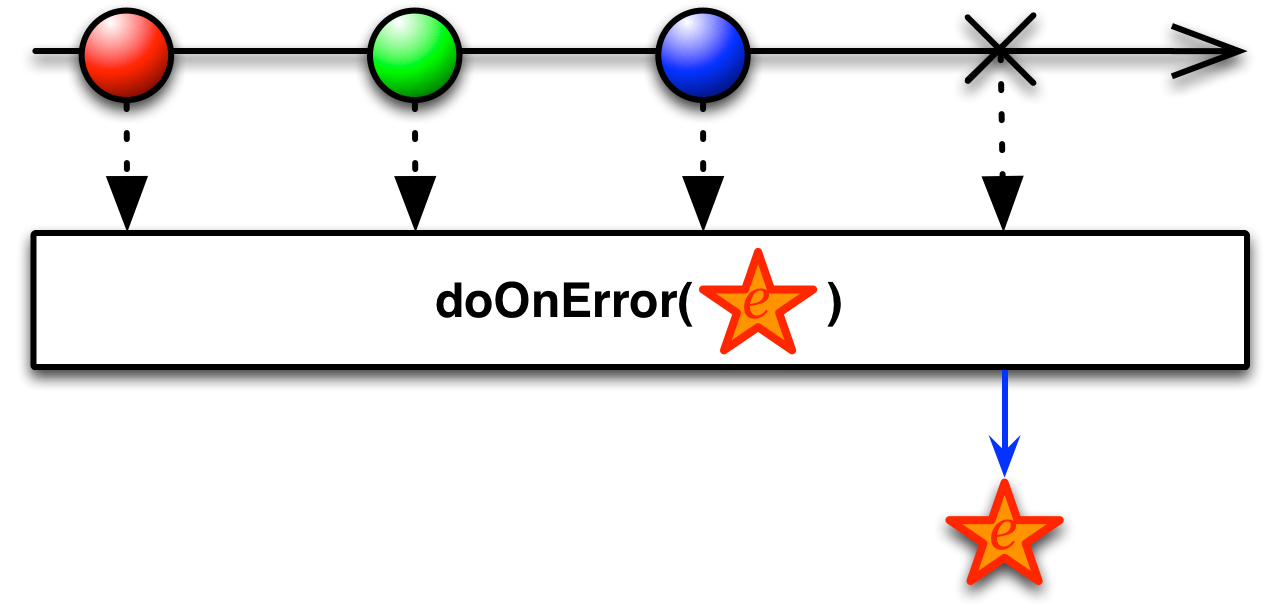
<T> doOnError(Action1 <Throwable > onError) Modifies the sourceSingleso that it invokes an action if it callsonError.In case the onError action throws, the downstream will receive a composite exception containing the original exception and the exception thrown by onError.
- Scheduler:
-
doOnErrordoes not operate by default on a particularScheduler.
- Parameters:
-
onError- the action to invoke if the sourceSinglecallsonError - Returns:
-
the source
Singlewith the side-effecting behavior applied - See Also:
- ReactiveX operators documentation: Do
doOnSuccess
@Experimental public final Single
<T> doOnSuccess(Action1 <? super T> onSuccess) Modifies the sourceSingleso that it invokes an action when it callsonSuccess.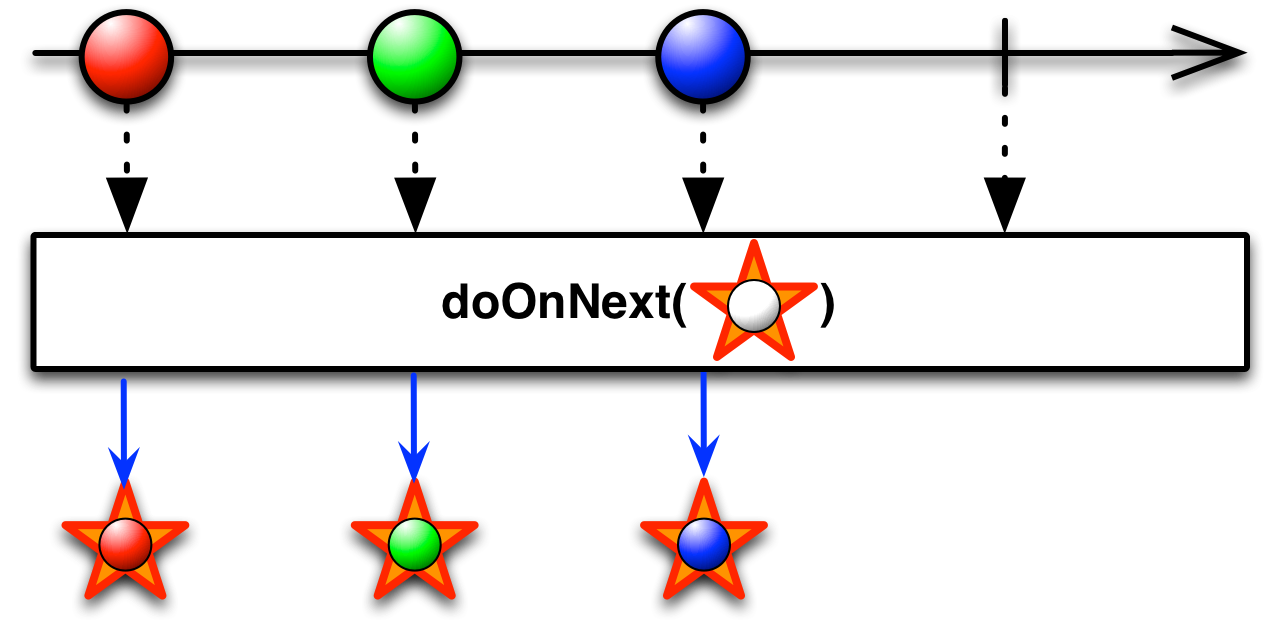
- Scheduler:
-
doOnSuccessdoes not operate by default on a particularScheduler.
- Parameters:
-
onSuccess- the action to invoke when the sourceSinglecallsonSuccess - Returns:
-
the source
Singlewith the side-effecting behavior applied - See Also:
- ReactiveX operators documentation: Do
delay
@Experimental public final Single
<T> delay(long delay, TimeUnit unit, Scheduler scheduler) Returns an Single that emits the items emitted by the source Single shifted forward in time by a specified delay. Error notifications from the source Single are not delayed.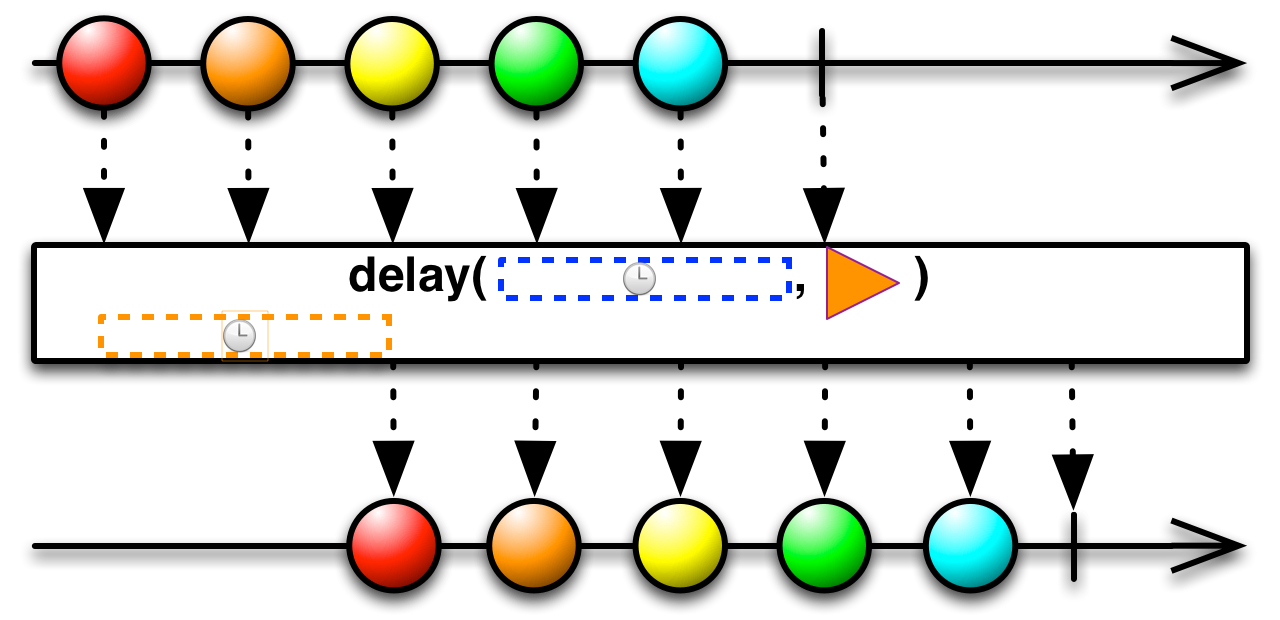
- Scheduler:
-
you specify which
Schedulerthis operator will use
- Parameters:
-
delay- the delay to shift the source by -
unit- the time unit ofdelay -
scheduler- theSchedulerto use for delaying - Returns:
- the source Single shifted in time by the specified delay
- See Also:
- ReactiveX operators documentation: Delay
delay
@Experimental public final Single
<T> delay(long delay, TimeUnit unit) Returns an Single that emits the items emitted by the source Single shifted forward in time by a specified delay. Error notifications from the source Observable are not delayed.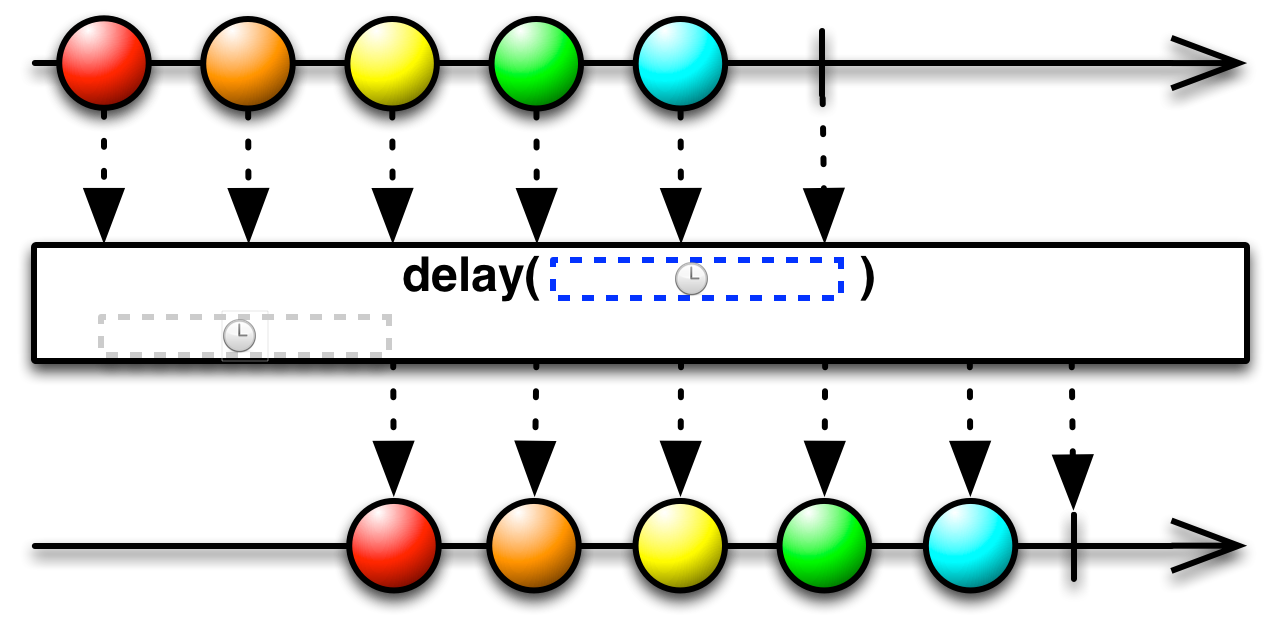
- Scheduler:
-
This version of
delayoperates by default on thecompuationScheduler.
- Parameters:
-
delay- the delay to shift the source by -
unit- theTimeUnitin whichperiodis defined - Returns:
- the source Single shifted in time by the specified delay
- See Also:
- ReactiveX operators documentation: Delay
defer
@Experimental public static <T> Single
<T> defer(Callable <Single <T>> singleFactory) Returns aSinglethat calls aSinglefactory to create aSinglefor each new Observer that subscribes. That is, for each subscriber, the actualSinglethat subscriber observes is determined by the factory function.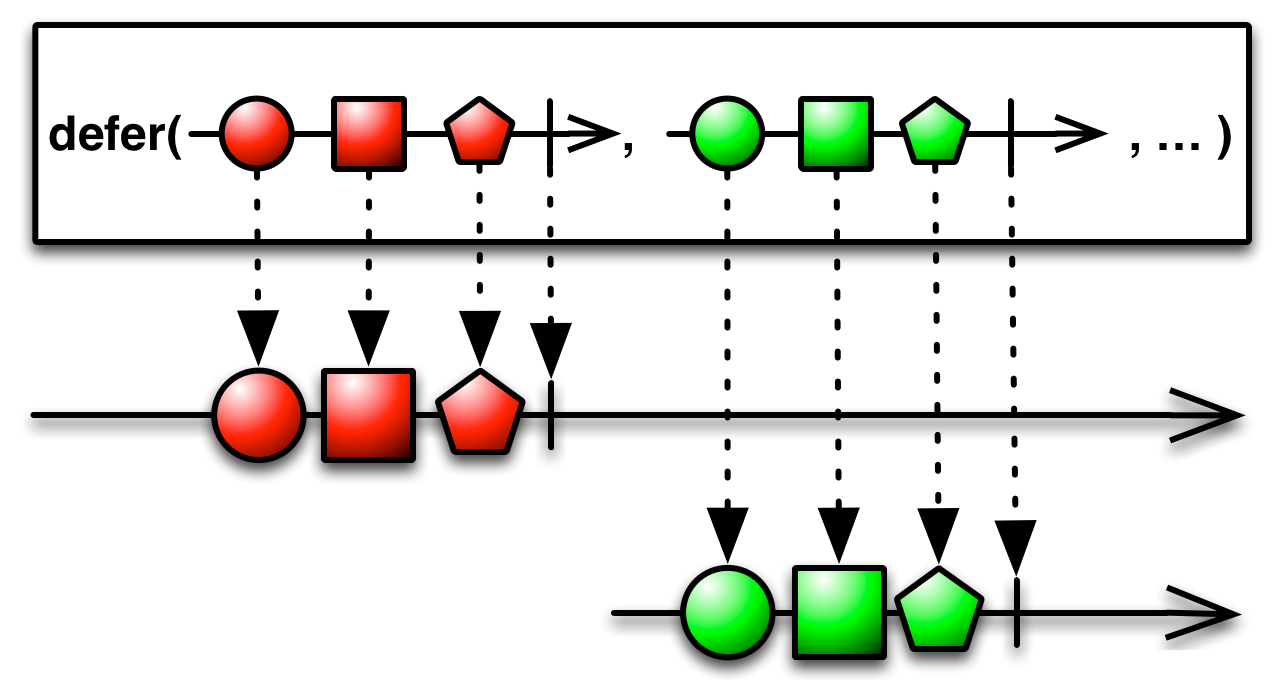
The defer Observer allows you to defer or delay emitting value from a
Singleuntil such time as an Observer subscribes to theSingle. This allows anObserverto easily obtain updates or a refreshed version of the sequence.- Scheduler:
-
deferdoes not operate by default on a particularScheduler.
- Type Parameters:
-
T- the type of the items emitted by theSingle. - Parameters:
-
singleFactory- theSinglefactory function to invoke for eachObserverthat subscribes to the resultingSingle. - Returns:
-
a
SinglewhoseObservers' subscriptions trigger an invocation of the givenSinglefactory function. - See Also:
- ReactiveX operators documentation: Defer
-